

Writing about my mom’s life required some tender diligence and editing as I introduced her siblings. My aunts are still alive, or at least I think so. One of the most painful by-products of my mom’s death was the detachment that occurred as my aunts distanced themselves from me and from my sweet sister Lisa. If I allow myself, I can unpack the ‘why’ but I try not to dwell on it because it’s still a potent pocket of pain.
My mom also had a brother. I refer to him in “Surviving Sue” as “Uncle Keith” and later “Uncle Gus” – the nickname he was given while serving in Vietnam. Uncle Gus died not long after my dad passed away and he was a source of tremendous support during the initial wave of shock and grief.
When I began writing about my mom’s tortured life, I wanted to detour more than once to tell my uncle’s story. In full. Of all the portions of the manuscript that received heavy red-line edits, the segments about my uncle’s life and his relationship with my mom were some of the most troublesome for me to tend to.
Here’s why. I don’t think you can write a Veteran’s story in brief. Even as a young girl, I saw the pain my uncle experienced when he returned from Vietnam and decades later, after a life of misbegotten adventures and ill-health, my uncle’s life had the makings of a book of its own.
Writing about his life ‘in brief’ would be an injustice, piled on top of many others that he endured during his life. I knew Uncle Gus needed to be included in Sue’s story, so I tended to those portions with care, hoping I was honoring him enough. I’m still not sure I got it quite right, but gifts from readers have helped. Let me explain.
As I’ve received feedback about “Surviving Sue”, I’ve enjoyed learning which themes stand out. I think there are many elements worthy of connection-making: elder care; disabilities and diversity; mental health and addiction; sister love; building resilience – to name a few. I didn’t expect that the threads about my Uncle Gus would generate as much interest, but goodness. They have.
This week’s “Peek Inside” is a tribute to my sweet uncle. Gone for many years but his life of adventure and service still resonates within me. He knew my mom’s demons and I observed how he navigated her madness, while preserving most of his own sanity. A master class in “Sue”, perhaps because they both carried pain and I suspect the source didn’t matter. He seemed to understand pain was pain and it created a bond between them.
Here are a few excerpts from “Surviving Sue” about my dearest uncle. God Bless Uncle Keith…aka “Uncle Gus”.
1973 – Uncle Gus Returns from Vietnam and Lives With Us:
- His jeans were baggy and hung low on his hips and his hair was receding. He smoked constantly and told us that he had a new name. While in the Navy, he said, everyone gets a nickname and his was Gus. “Call me Uncle Gus.” And we tried, but it was confusing. Uncle Keith is now Uncle Gus? It seemed important to him and now I understand. It’s how he remained connected with his wartime friends. Names matter – especially nicknames given by those you love. Special bonds.
- Uncle Gus had bad dreams at night. My room was directly above the dining room, and I often heard one of two things late at night. Sometimes it was the radio and pop music wafting up through the floor. More often, I would hear a piercing scream – no words, just a sharp wail that sounded like pain and fear boiled together – and then silence. When that happened, I wondered if I should check on him. I would lie awake and wait to hear a little rustle of movement to confirm he was okay. If I woke up to music, I’d sneak downstairs to sit with him and he didn’t mind. I never asked directly about the night terrors or screams but I think he knew I’d heard those too – not just the music.
- He showed me a photo from his wallet. It was a beat up and raggedy-looking black and white picture and it showed Uncle Gus smiling with his shirt off, embracing two other sailors standing by their ship. Those sweaty, shirtless guys were his two best friends, he said, and he suspected he would never see them again.
- As a professional later in life, I worked with Veterans and learned about PTSD and the recovery journeys for those who serve our country. I didn’t understand it at the time, but Uncle Gus was doing the best he could to take care of himself by decompressing – and for him, that meant staying in the dark dining room, drinking, and smoking.
1997 – Uncle Gus and My Dad’s Funeral
- Uncle Gus looked like Hell. His hair was more sparse and his beard was shaggy and overgrown with patches of gray throughout. I found myself fixating on his white t-shirt; the chest pocket carried his trademark pack of Lucky Strikes and his sleeves were each neatly rolled up, almost as if they’d been ironed and creased. Is he sending t-shirts to the dry cleaner, I wondered?
- Uncle Gus and Sue were sitting at the kitchen table and I could tell Sue was annoyed as soon as I entered. I realized later I’d interrupted their conversation – the one where Gus was gearing up to reveal his terminal cancer diagnosis. I wasn’t trying to intrude; someone needed to clean up the overflowing mess before we left for the funeral home.
- Uncle Gus and Sue were quiet for a while as I washed the towering pile of plates and silverware. Their silence felt like needles, prickly and uncomfortable; I didn’t know if I should stay or go and finally Sue broke the tension as she stood to grab the Kleenex box from the counter, giving me a scowl. Uncle Gus lit a fresh cigarette and began to speak, sounding serious and somber, saying he came to pay his respects to Sonny but also figured he might not see us again. Whether it was Agent Orange, years of smoking and drinking, or just his fate; he had – at best – a couple of months to live.
- No cremation. No burial. He decided to donate his body to the medical school at the university he’d worked at. Before he owned the bar. But after he built sailboats in St. Croix. Before he worked oil rigs in the gulf. After he served his country and got cancer in Vietnam. He laughed as he mentioned all of that – in a weird, I’m just checking off main events of my life way – in one or two syncopated breaths.
- Everything he asked for occurred, thanks to his pre-planning. Six months after Sonny’s death, Uncle Gus passed. No fanfare, no hero’s funeral. He was simply gone. Once or twice, I’ve had a nightmare about seeing his body in a cadaver lab. He’s covered up with a green sheet, lined up next to other bodies on gurneys, but I know it’s him. He’s the only one with his face peeking out and he’s smiling. When he winks at me, I scream silently and wake up.
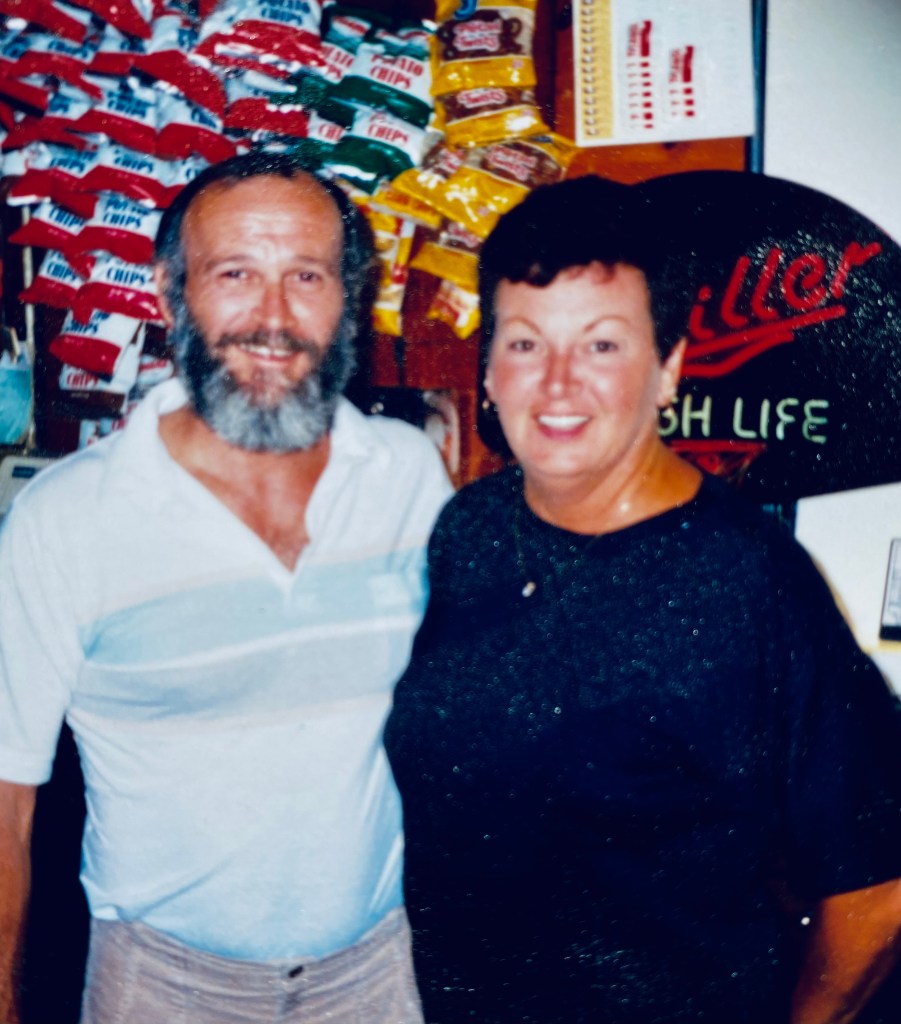
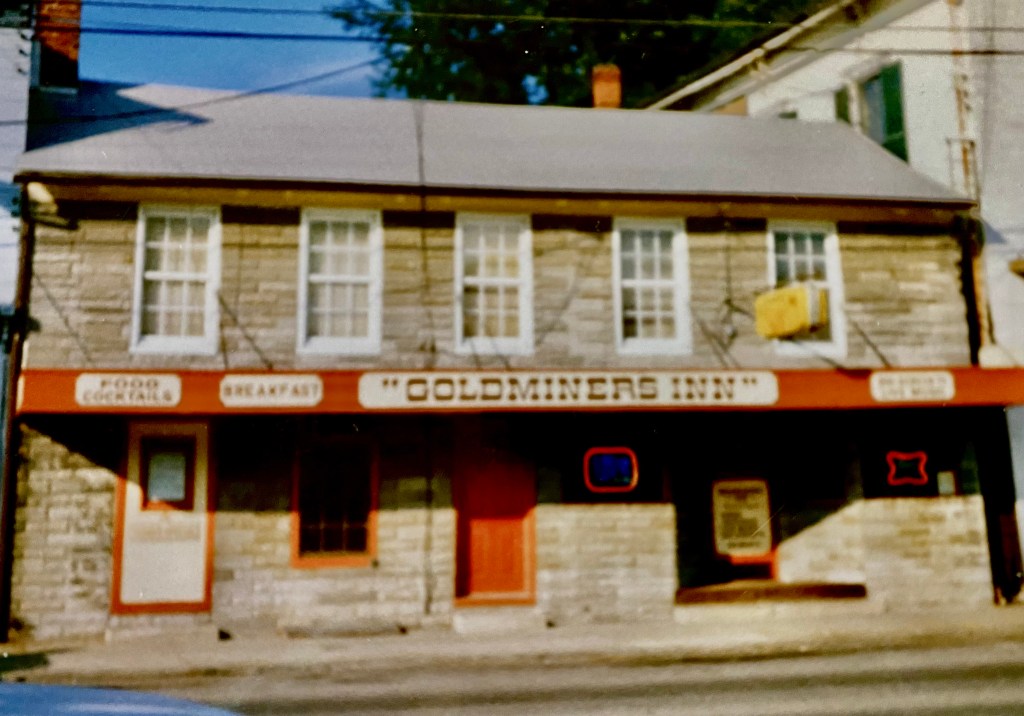
When I think about him now, I imagine he’s still tending bar at his favorite place – a little pub he purchased when he knew his time was short. His dream was to open a bar where fellow Veterans could be comfortable, feel welcomed. Whether they could pay or not. A burger and beer with friends and good music. Uncle Gus’ idea of living well.
Sue visited him twice before he died and the pic I included (above) of them is a favorite. Almost as much as his nonchalant doorway pose, and his face as a youngster, in uniform, off to serve in 1967.
Thank you so much for reading – both these ‘Peek Inside’ posts and “Surviving Sue”. It means a lot and I’m glad I’ve introduced you to Uncle Gus.
Vicki ❤


 Victoria Ponders
Leave a reply to E.A. Wickham Cancel reply