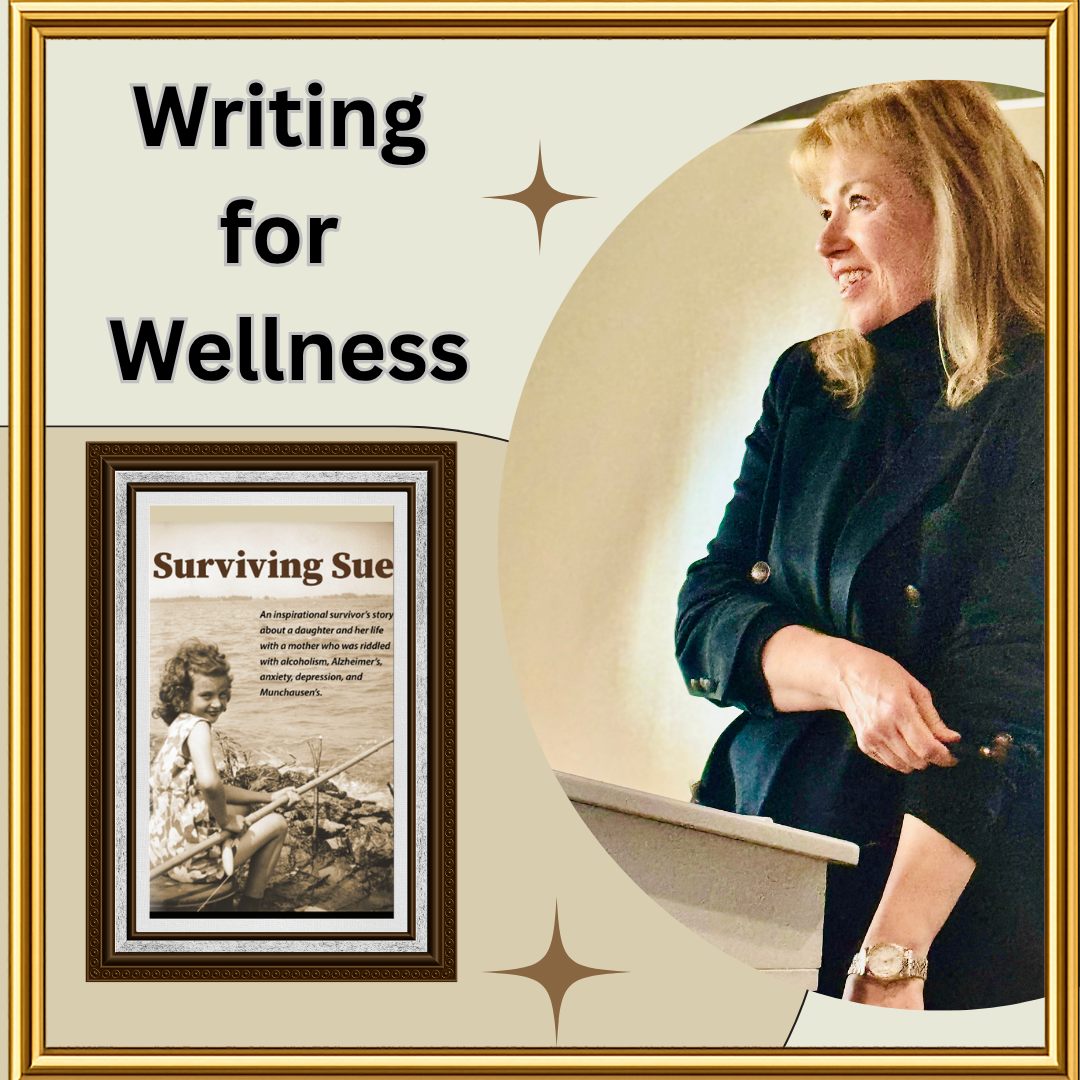
What a treat it was to be back on campus.
My Thursday morning journey to the Hill Library, tucked into the center of campus, was quiet. Reflective. I walked familiar paths, taking my time as I wound my way to the Quad. Giving the bust of Dr. William Rainey Harper, the college’s namesake, a secret wave as I passed by.
I chose to park on the outskirts instead of the newer parking garage so I could cross the footbridge over the little body of water I’ve affectionately called ‘Lake Harper’ for years but it’s really just a retention pond. The benches scattered around it hold secrets from whispered conversations across decades – sitting with my thoughts or with students and colleagues. Complaining about the geese, the weather…but eventually getting to substantive topics.
Walking the same path on Thursday I meandered on purpose. Taking “Surviving Sue” on the road is an emotional experience for me. Sue’s become my ride-along at events, her essence tucked inside a basket along with business cards, handouts and resources. I imagine she’s smiling. Stunned and surprised by the interest in her life, curious about the questions readers ask. Sorrowful about the pain she caused, running from her own agony and regret. Grateful she’s made peace with her youngest daughter. Grateful to see Lisa, her eldest, thriving at long last.
My heavily marked-up copy of “Surviving Sue” travels with me and for the Harper reading I chose two excerpts. One showing the comedic/tragic side of Sue from one of the “Sue or Lucy” vignettes in the book. Seeing the parallels between my mom’s behavior and the antics of “I Love Lucy” gave little Vicki, the budding social scientist, a lifeline.
The other excerpt is heavier. One I’ve shared a few times in other presentations – about Sue’s descent into dementia and Alzheimer’s disease, diagnoses layered into her already complex soup of mental health and personality disorders.
Despite the decades of drama/trauma with Sue, the cavalry was on the way when I needed support and one of those champions was a geriatric psychiatrist named “Dr. Carole”, a fearless, whole-hearted woman.
Prepping for the Harper event, I reviewed passages so familiar I can nearly recite them from memory. It’s a strange thing, re-reading your own words, gleaning fresh meaning. The first couple of times I scanned the “Thank God for Dr. Carole” excerpt, wondering where to condense and edit, I felt nauseous. Bumpy and uncertain and I didn’t know why. So, I put “Sue” away and worked on fresh PowerPoint slides as background visuals for the event. A day or so later, I returned to the text and understood the quiver I’d felt. Right there, in my own words sat an a-ha I overlooked, examples of hypervigilance in action the day I met Dr. Carole.
Let me share the two passages to catch you up and then I’ll explain.
The description of Dr. Carole’s office on the day Sue and I met her for the first time, p. 201:
I arrived first and sat down in the waiting area, noticing the office was small and pervasively beige. No fancy frills or aquariums. No TV. Just one piece of art hanging over the half-empty magazine rack; a lopsided landscape which looked like a grown-up paint-by-numbers or one of Sue’s paintings of the California mountains. Sue will like that, I thought.
My impression of Dr. Carole in our first encounter, p. 202:
Dr. Carole’s entry was accompanied by a wave of warmth and sincerity. And as crazy as it sounds, she had a blue light framing her head like a halo. Inspecting her further, I saw she was round and full, maybe forty years old, and sported a well-worn blue cardigan, sensible clogs and stretch pants. Her wavy brown and wayward curls suggested wash-and-wear hair. No artifice. No make-up.
When readers ask about the rich descriptions I offer of places, people and conversations in my book I often answer by leaning into my capacity for remembering details as a by-product of my career as an educator, therapist – being a dutiful note-taker throughout my life. But I missed the insight. There’s a more potent reason for my detailed recall and it’s interwoven with my own brand of anxiety, thanks to life with Sue.
When I read those two passages, I was gobsmacked. Right there in two short paragraphs, thinking I was just being a detailed writer – trying to take you into the scenes, the experience of meeting Dr. Carole, describing her office – I revealed hypervigilance. A characteristic carried by survivors of all sorts. Including yours truly.
My favorite short and sweet description of hypervigilant behavior comes from Dr. Susan Albers: “It’s your brain’s way of protecting you by scanning the environment for signs of danger and being extremely aware of your surroundings.”
The skills I have in recall come from being hyper aware, hyper alert as an adaptation technique with Sue. Every day in ways subtle and sometimes less so, I scanned the perimeter. I was the “advance man”, the girl on patrol, scouting for possible incendiary triggers for Sue – in places and in people. I was relieved when I saw Dr. Carole’s office was ordinary. Fancy people and places made already insecure Sue feel less than. Prompting bad behavior. Arrogance born of frailty, but your average onlooker didn’t know. In truth, I didn’t know for years, but it’s why I write…why I believe in the concept of ‘writing for wellness’.
I knew Sue would be uncomfortable if Dr. Carole was too pretty, too perfect and chaos would follow. Years of low self-esteem, body shaming and disordered eating were parts of Sue’s story, too, and if a woman was too good looking, Sue felt frumpy. Barriers would rise.
While reading the Dr. Carole story at Harper, I paused to offer a sidenote of introspection about my own hypervigilance and the glimmer I gleaned reading these passages anew. Finding meaning in my own words, hidden and tucked away. Waiting for me. Yep. I’m a hypervigilant woman. Someone who needs protection from herself, often feeling responsible for all the things…even events and mishaps well outside my sphere of influence. Keeping myself in check is a full-time job, one of the threads in my own healing journey, tending to my anxiety, understanding its sources, recognizing the patterns, hard-wired within.
This may not surprise you, but my sidenote sharing became a touchstone for several attendees, recognizing their own hypervigilant behavior. Conversations after the event were endearing. Affirming. And you, dear reader, thank you for being here and joining the circle of sharing about my life, my book.
Here’s a virtual peek at the event:


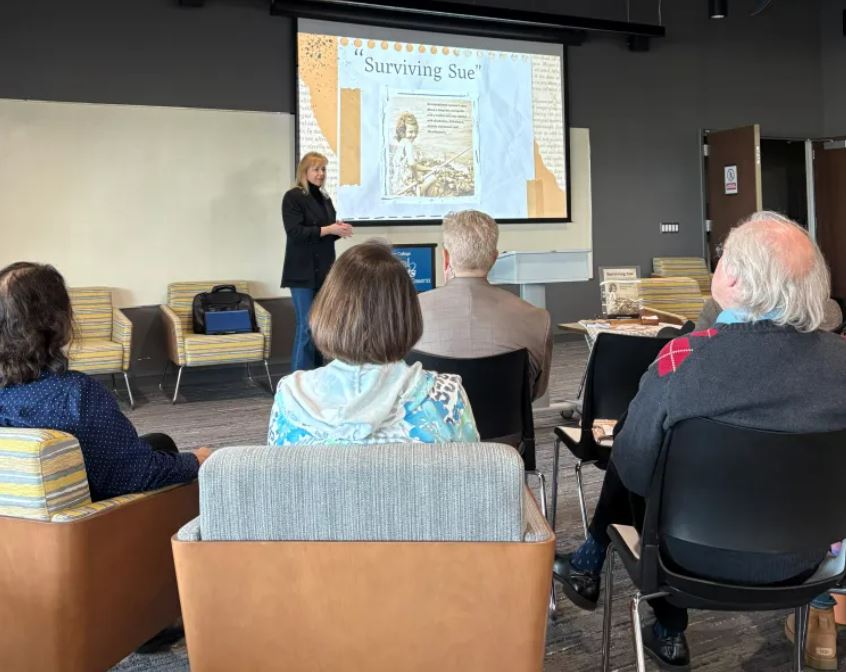

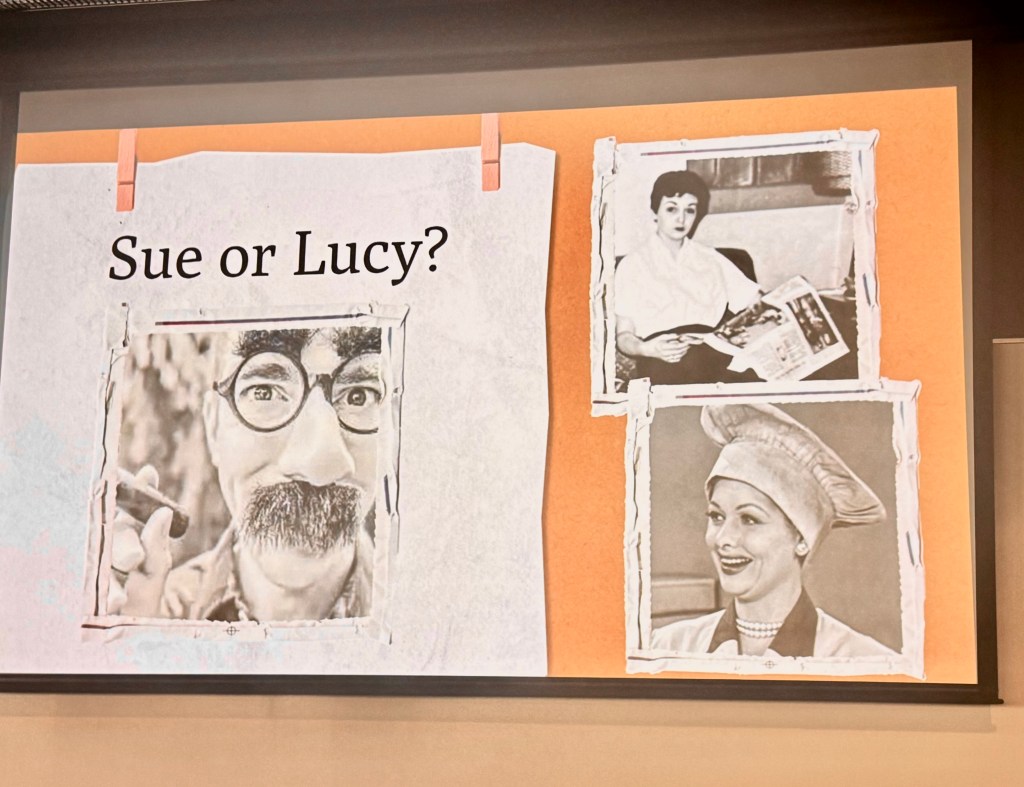
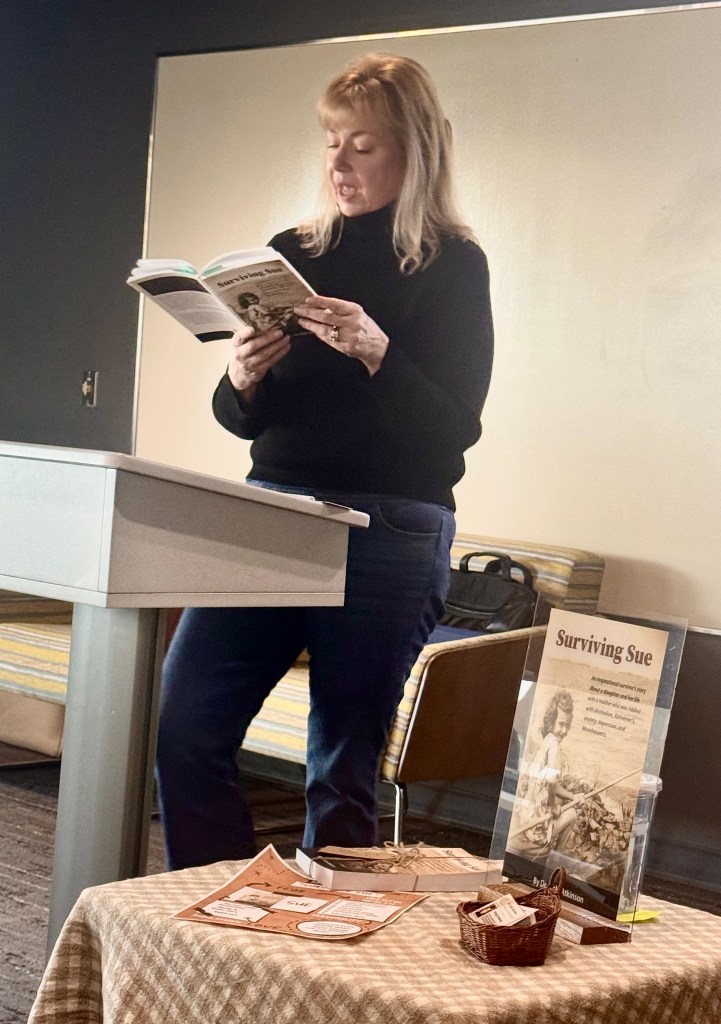

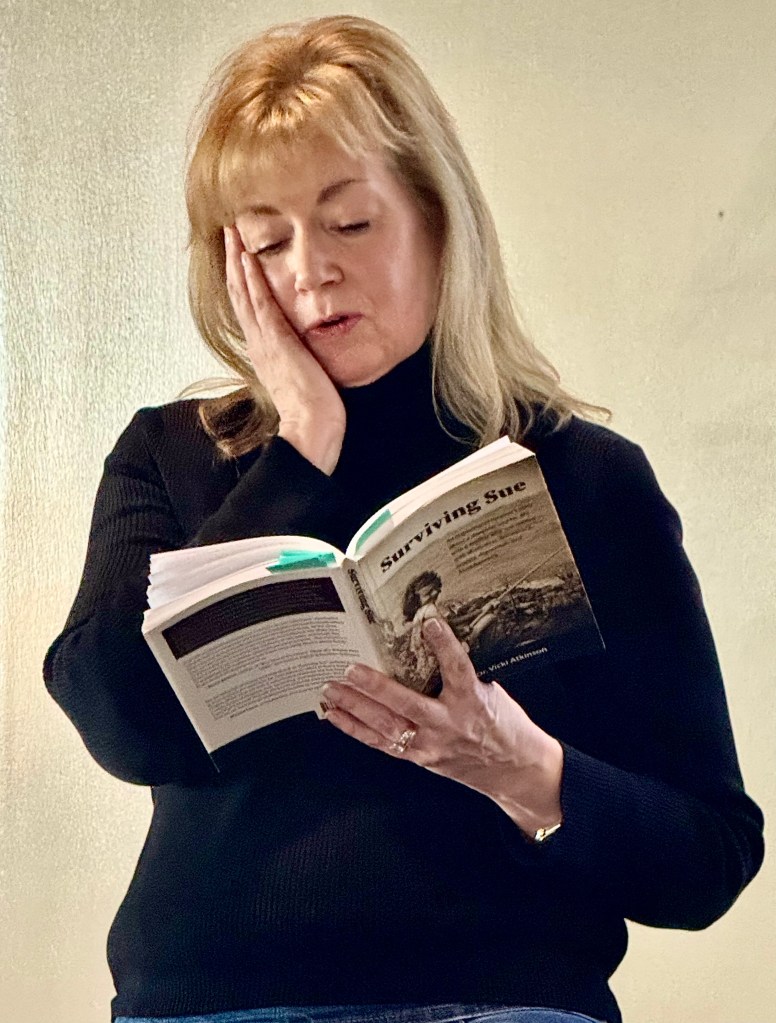

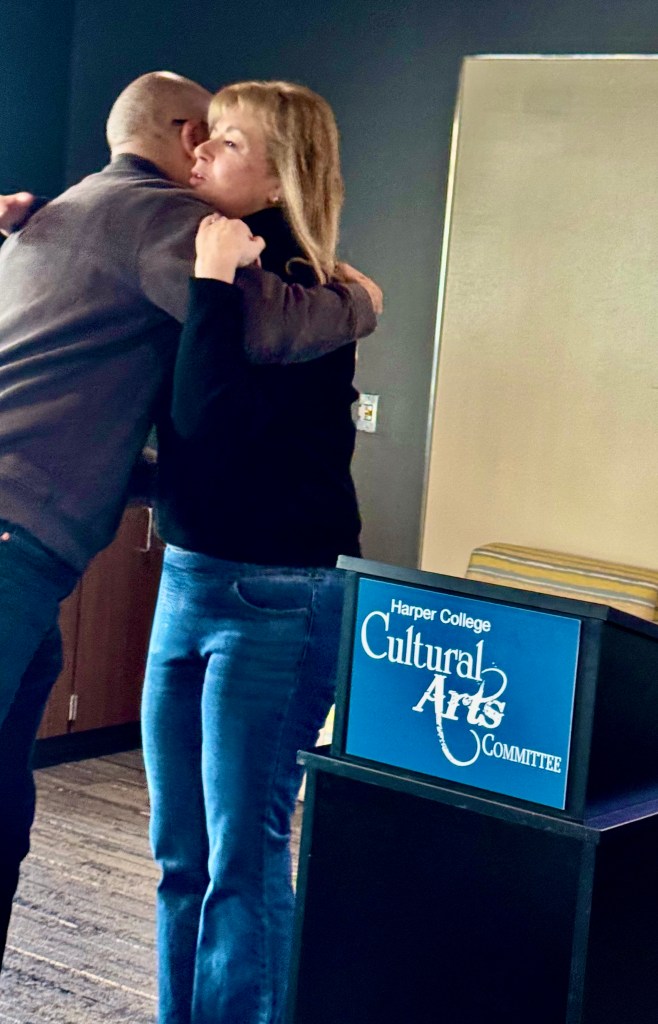


I was thrilled my dear friend, fellow blogger Edward Ortiz was there. What a treat to meet blogging friends in person! One day…one day. We need a big and grand meet-up so we can all visit in person. (Wynne Leon, talented one. We’re looking at you. We need to find a way!)
Edward was kind enough to attend AND share his beautiful thoughts here. I love how he highlighted a wonderful interaction with a student who asked an excellent question. So good!
I’m grateful to my dear friends, former colleagues and members of the Barrington Writers Workshop for all of their support.
Sending big hugs to all,
Vicki 💝
What Is Hypervigilance? Causes and Examples
Are You Hypervigilant? | Psychology Today
Edward’s Beautiful Blog: Thoughts about leadership, history, and more
Hi – I’m Victoria, Vicki, Dr. Vicki. I hold a doctorate in Adult Education and I’m a Licensed Professional Counselor (LPC), and author of Surviving Sue | Eckhartz Press.
Check out this link to learn more about my book “Surviving Sue”.
Click here for Sharing the Heart of the Matter podcasts with talented creatives.
Click here for videos of our podcasts. Thank you!


 Victoria Ponders
Leave a reply to E.A. Wickham Cancel reply