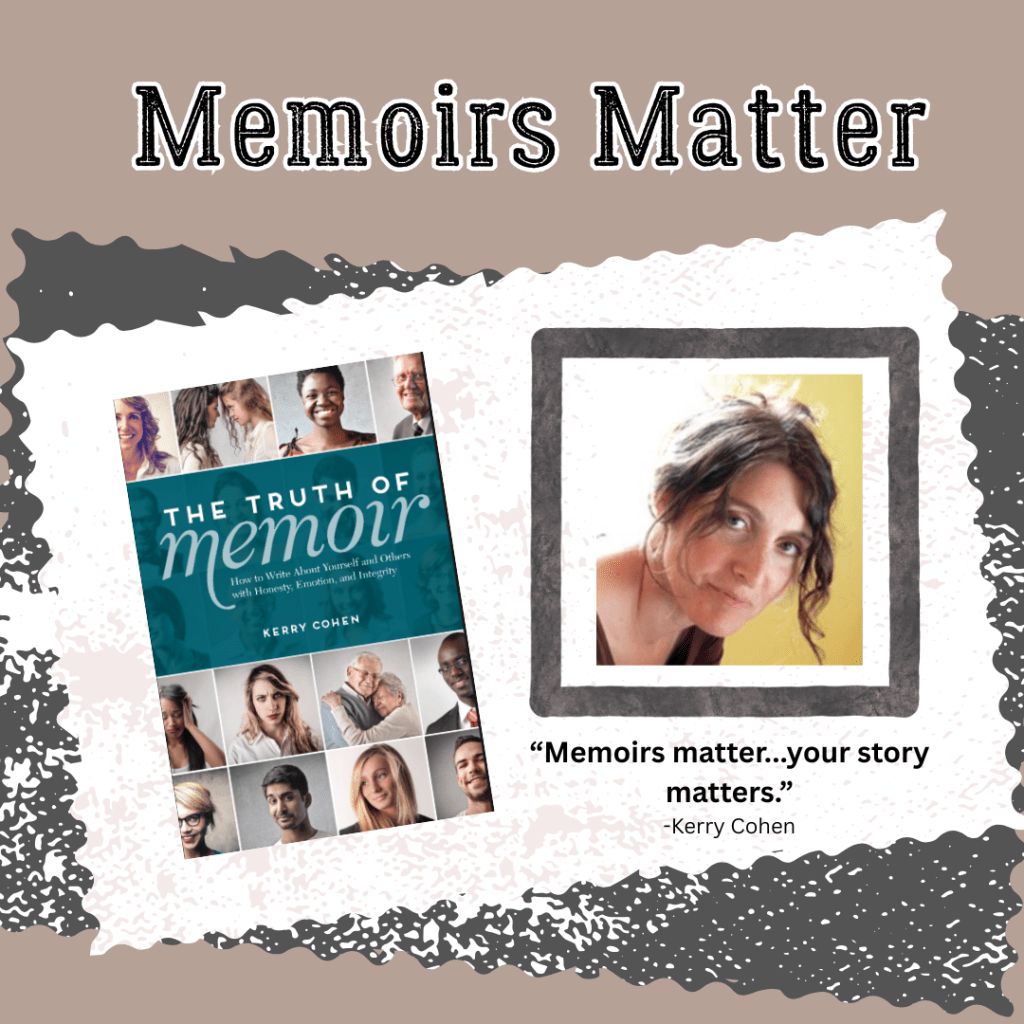
In three separate conversations last week I talked with fellow writers about their exploration of the memoir genre. It’s a thread, for sure, in the “Writing for Wellness” workshops I do, becoming an ever-more frequent topic as folks sort out individual identity issues, the impact of family dynamics and invariably, hopefulness about the future. Using memoir as a gateway.
Concerns are often palpable — especially the trepidation about worthiness and readership. Even before the memoir’s written…anticipatory worries in the writer’s head.
Worthiness
Worthiness? Ah. We all face it. The sense that we have no business writing whatsoever, especially a memoir.
I’ll be judged. I’ll be misunderstood. I ‘ll hurt someone’s feelings. I don’t write well enough.
And these nagging questions run alongside, spinning angst:
How much do I tell? Where do I begin? What’s the scope?
There’s a fix, but I use extreme caution, smiling with encouragement to avoid offending when I say:
Fretting about worthiness and value = borrowed problems. Barometers and measuring sticks set by someone else. If you’re serious about writing for wellness, you’re the only critic who matters. Sit down and write.
And while you’re at it, rein in the opinionated inner critic.
The Plague of Pursuing Perfection
Do you know about “jelly stain” wisdom? Six words of advice offered by my dear friend Harlene Henry when she reminded me, at a vulnerability junction, that a writer’s pursuit of perfection is silly.
“Don’t be afraid of jelly stains.”
Include them! Write with grit and gristle.
Too much polish and our writing becomes mechanical. We might lose our voice by over-editing or by seeking input from others too soon. This is a road I’ve walked…succumbing to uncertainty in order to silence the pang of vulnerability.
Someone else will know how to say this better…
Giving ourselves distance from our words is a time-honored, terrific idea. A simple, short-term shelving gives both you and your work time to breathe. Marinate. After a separation (you determine how long – a week, a month or more), reuniting is a good next step before sharing, asking for advice.
Especially in the memoir genre.
I cannot say this enough. As many times as necessary, return to the well of why to reinvigorate your motivation. Be bold. Be confident. Read your work aloud to connect with your voice, feel the spark.
And this, this, this! Remember, you’re an artist, after all. A creative, with words.
Author Kerry Cohen, in her impactful book, “The Truth of Memoir” refers to us as “light shiners”. I like that, don’t you?
The person who grows up to be a writer or artist of another sort is almost always the family member who witnessed her family members at their worst – abuse, horrible fights, alcoholism and so on. We were the ones who rarely spoke about what we saw, but what we saw ate away at our insides, begging to be told. We were the truth tellers, the light shiners, the ones who were eternally misunderstood. And here we are, finally before our screens, our fingers both itchy and hesitant, ready to tell our truth.
Cohen, p. 24
Cohen’s wisdom falls into a category of If You Know You Know (IYKYK). Heavy nods of recognition every single time I’ve referenced those three sentences with a budding memoirist. One of my favorite, encouraging tips!
Addressing Readiness and Timing
Every story needs to be told at a certain time, and each story deserves that consideration before it enters the world. The answer to when your story needs to be told is only partially based…on your emotional relationship with the material.
Cohen, p. 11
I waited eight years before I considered writing about my mom, Sue, in “Surviving Sue”. The urging of our adult daughter provided impactful motivation: Delaney sought clarity and a deeper understanding of the chaotic family dynamics she witnessed during her childhood. She gifted me with a potent ‘why’, wrapped in the pursuit of intergenerational healing.
The timing of our tearful mama/daughter conversation was serendipitous; it aligned with the healing I’d done about the trauma and tumultuousness of life with Sue. I was ready. Ready to write.
Said another way? William Zinsser, in “On Writing Well: The Classic Guide to Writing Nonfiction” said memoir writing requires one to write from an emotional state forged with forgiveness and not victimhood. I think I achieved that with “Surviving Sue”. I was ready. And the fact that my memoir’s helped others in the three years since publication? Profoundly humbling.
No matter what you choose to write, I’ll be cheering you on. If it’s memoir? I’ll send extra love because memoirs matter.
Vicki 💝
P.S. Coming soon? I’ll share another fresh review of my novel, “Slivers” from a reader who made connections between my two books. Here’s a peek at what Joanie offered this week…about me and “Surviving Sue”. Can you see me smiling?
From the moment I met Vicki Atkinson, I felt our connection. Something about her …
She emanated warmth, openness, and kindness. She was insightful. Friendly and funny. Honest. Yet, perhaps most striking was her intuitive wisdom. Uncanny, almost as if she could read my mind. Hmm …
That her writing is a reflection of these qualities didn’t surprise me in the least. In her memoir (and first book), “Surviving Sue,” Vicki unselfconsciously reveals family secrets buried within the insanity of growing up the daughter of an alcoholic mother—also afflicted with anxiety, depression, Alzheimer’s, and Munchausen’s. Despite this childhood-into-adulthood trauma, Vicki’s story is one of survival, yes, but also, ultimately, one of compassion, forgiveness, healing, and hope.
-Author and Illustrator, Joanie Becker Goldberg
Hi – I’m Victoria, Vicki, Dr. Vicki. I hold a doctorate in Adult Education and I’m a Licensed Professional Counselor (LPC), and author of Surviving Sue and Slivers.
Check out this link to learn more about my book “Surviving Sue” – all about resilience and love. Check out this link to order “Slivers”…a ghost story with surprising twists.


 Victoria Ponders
Leave a comment