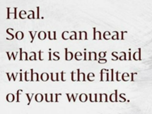
I adore the anonymous quote I snipped in (above). When readers have asked about my capacity for forgiveness, the secret sauce that helped me survive Sue, I often think of this wisdom. It was my task to heal so I could better understand the mix of madness and love that bubbled within my mom. One of the recollections that helped was revisiting Sue’s advocacy heart, especially for disabled persons. She was fearless and defiant as she pushed for services and equal opportunities long before laws were in place in the U.S. to ensure protection. Sue knew how to build alliances with other families – especially mothers – and rose to every challenge as she organized fundraising events and protested, demanding attention and action from elected officials.
It was a different time. A backward time in the early 70’s, long before the ADA (Americans with Disabilities Act) and Sue knew that many developmental, intellectual and physically disabled children became cast-offs as families were preyed upon to relinquish guardianship. She and my dad, Sonny, faced similar challenges with my sister Lisa as well-intending doctors and family members discouraged them from committing to care for a child who might “never be normal”. Lisa’s brain damage at birth resulted in motor issues, cognitive dysfunction, and low vision. Time and again, doctors who had little to offer in terms of support or treatment urged a “greater good” that involved institutionalized care for little Lisa.
How did Sue stay strong, so much so that she pivoted her rage toward civil action? I’m not sure, but she found her rallying cry and bit by bit, she made a difference in the small Ohio town we lived in at the time.
No bus service to take disabled children to schools with staff and services? Sue organized parents to become trained and licensed to drive. No buses? Sue had a solution for that, too, and used her contacts in her hometown to wrangle donated wheels and made it work.
Because of Sue’s unwavering commitment, Lisa thrived, for a time. So did many other children like Lisa. Sue enjoyed the status and significance for herself, but her purpose was clear. Lead in order to pave the way. Hell or high water.
Each time we moved (many times due to Sonny’s promotions) Sue tried to regain her activism footing but it became increasingly difficult as she slipped into mental health and addiction issues. Her once boisterous and infectious behavior became twisted and tyrannical and fewer moms and families were inclined to align with and follow Sue’s campaigns. Maybe she noticed? I’m not sure because she powered on. I know she was lonely and unaware of why her previous successes were hard to replicate. She found alternative paths, typically throwing herself, feverishly, into volunteer roles at Lisa’s special needs workshops as an exuberant mother. The problem? Her chaotic and driven personality and the fact that she wasn’t a staff member but behaved as if she was – a fully anointed and card-carrying member of each team.
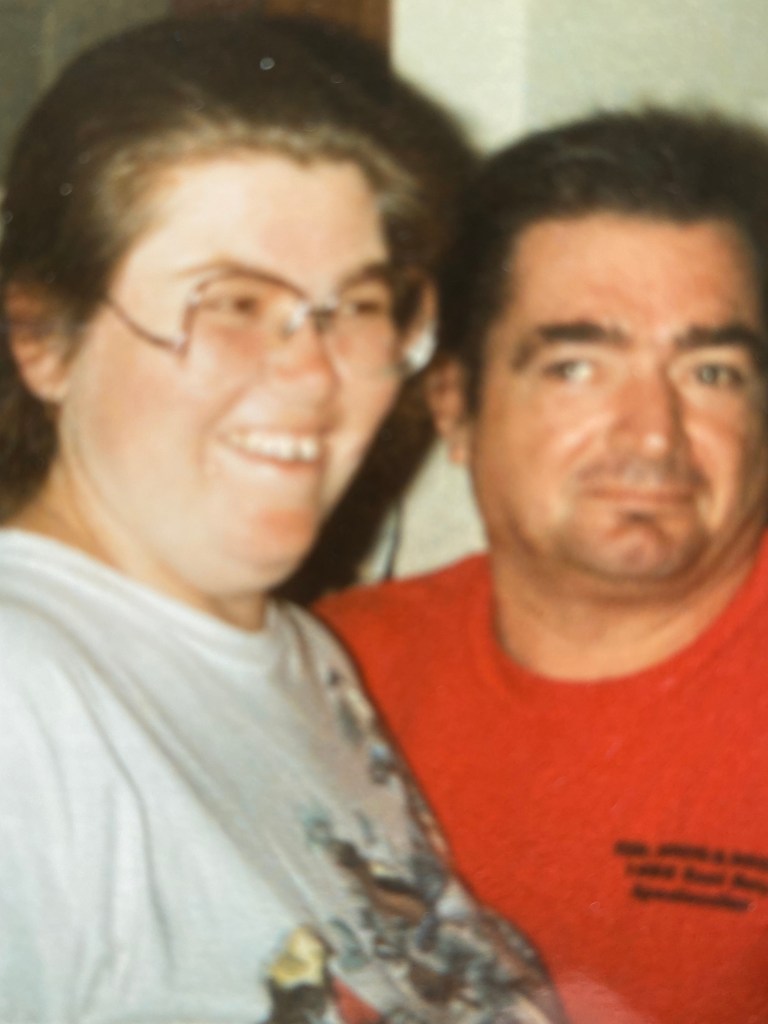
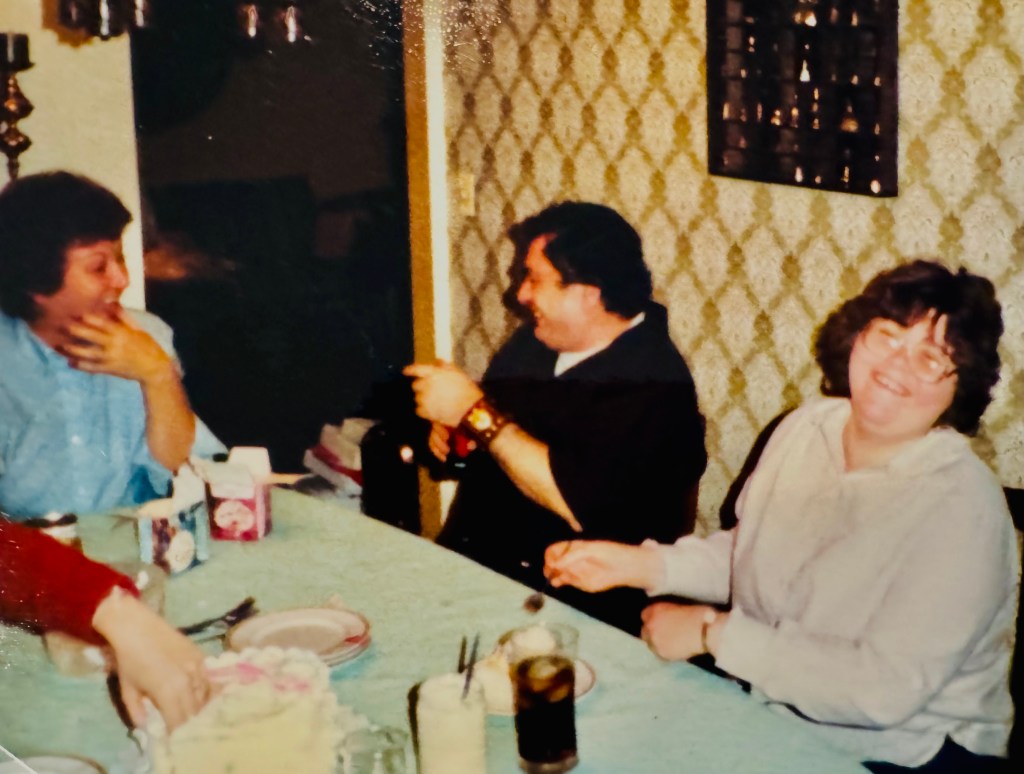
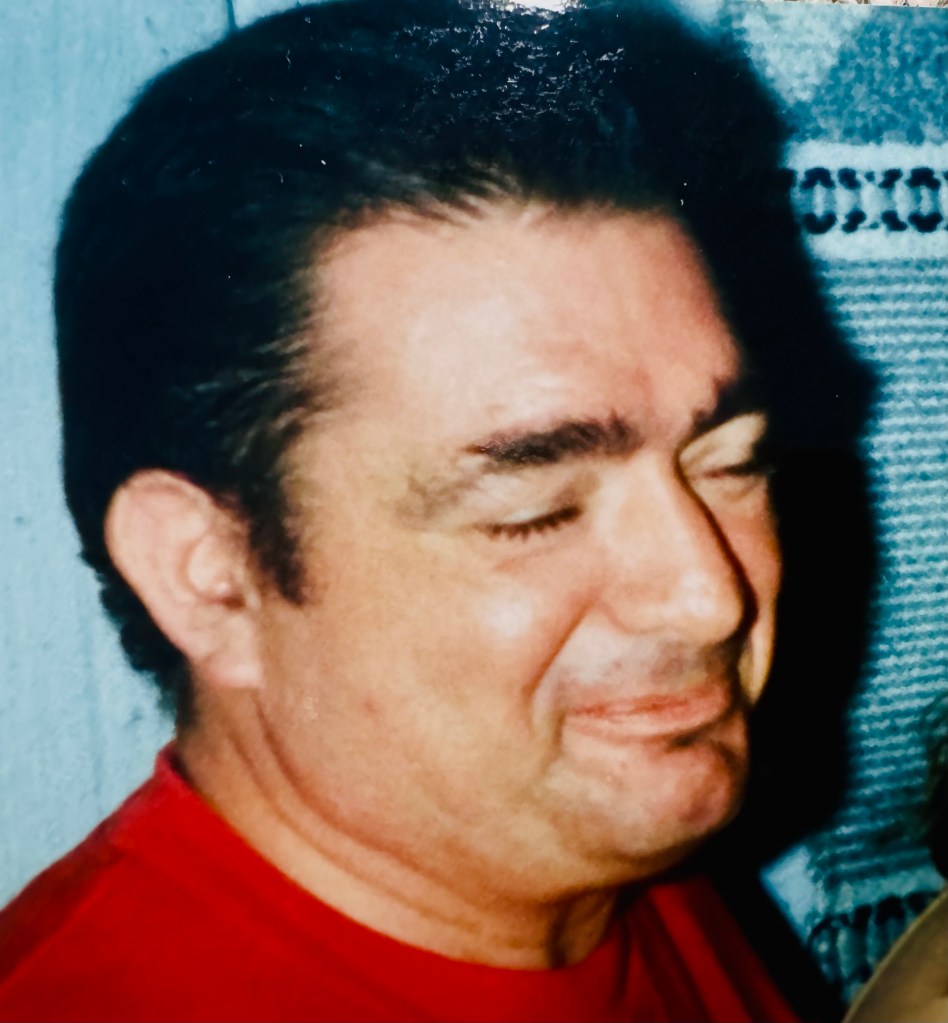
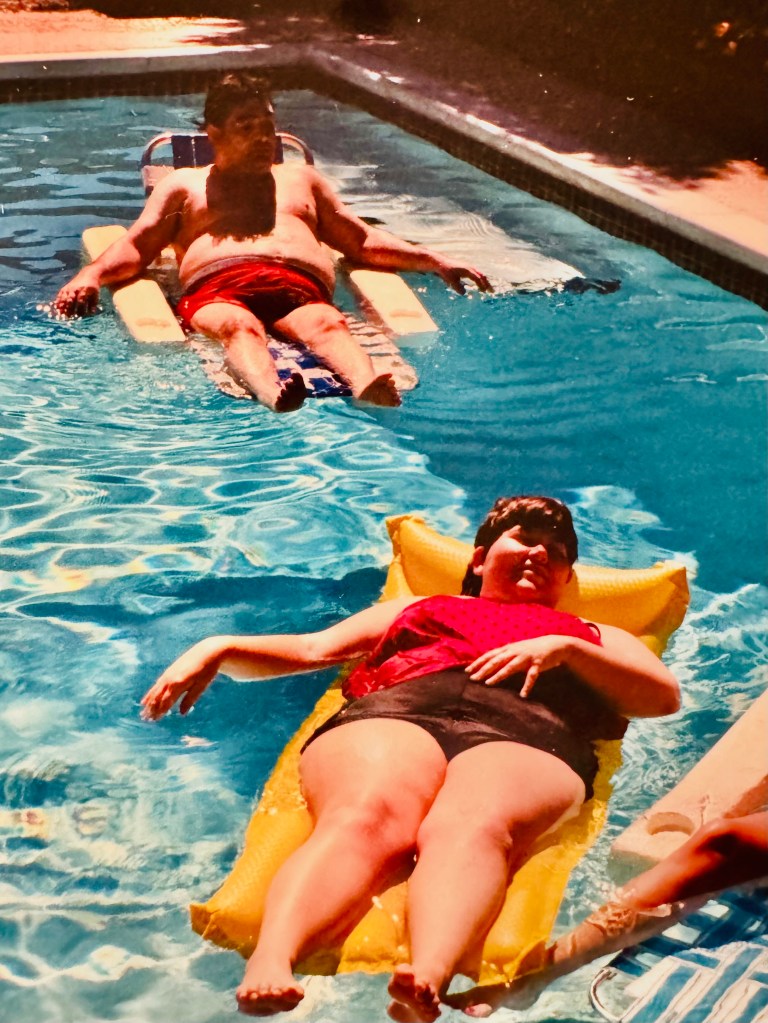
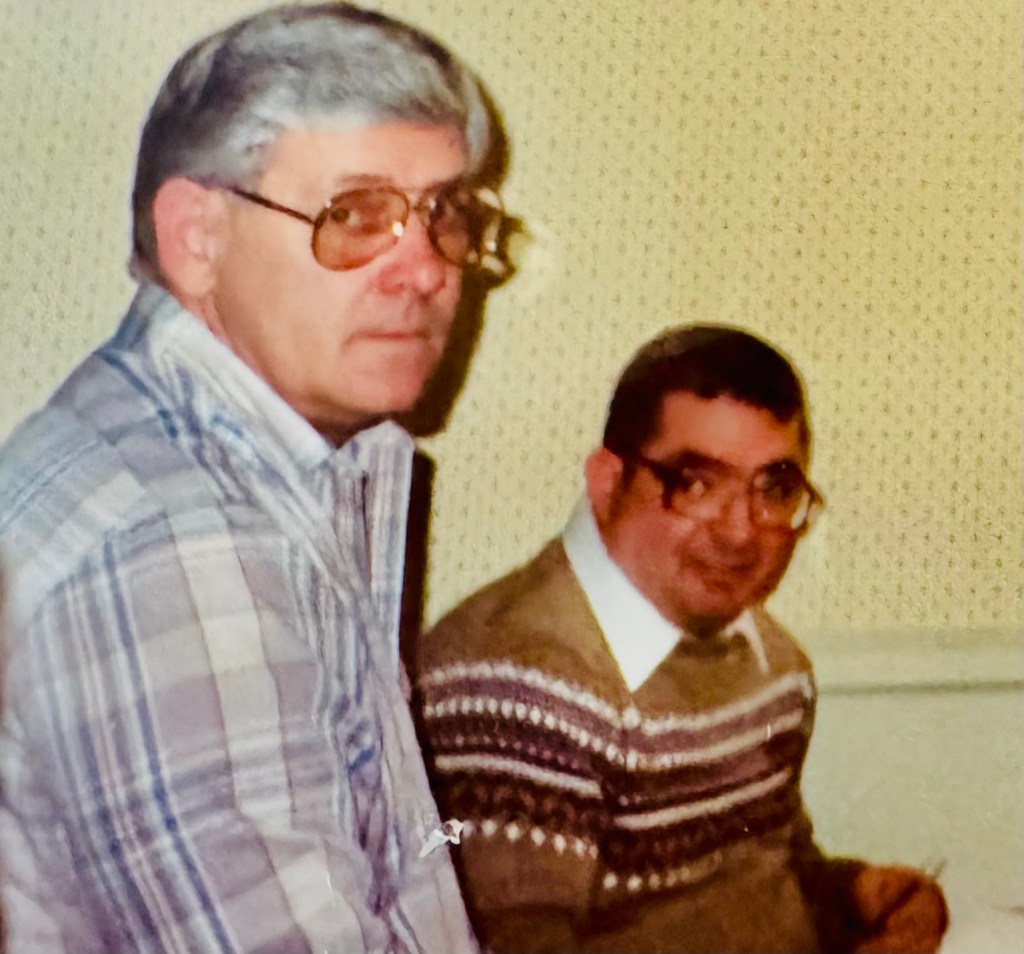
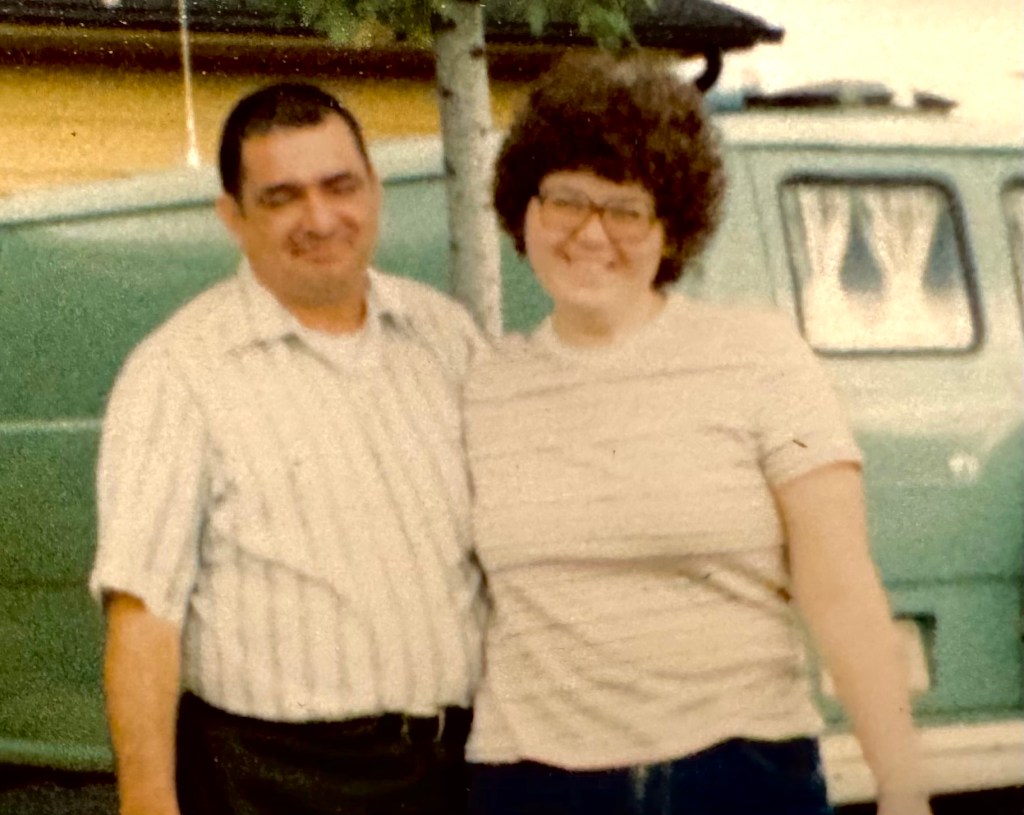
When she lacked the ability to socialize and mobilize, Sue found her groove providing respite care for other disabled adults, like Lisa. In “Surviving Sue” I write about one sweet soul, Lisa’s friend Michael, who became a surrogate member of our family. No one knew how little time in the world Michael had left, but thanks to Sue, secrets about his tortured life were uncovered and he lived some of the best years of his life as a member of our wacky tribe. Here are a few photos of Michael, Lisa, Sue and Sonny during this time. Birthdays? Vacations? Holidays? Michael – for a few years – was a welcome addition to our family:
I share some of the details about Michael’s life in “Surviving Sue“:
Michael’s story was a tale of horrifying pain and isolation but when he met Lisa, Sue, and Sonny, he found a makeshift family – a first for sweet Michael. Sue and Sonny’s hearts ached as they learned about Michael’s life. Mine, too. Let me share. It’s shocking and painful, still, but it’s also a part of Sue’s story related to her capacity for empathy and her heart for advocacy – especially for the intellectually disabled.
Michael was born brain damaged in 1951 and suffered in ways similar to Lisa. Michael was premature – born at six months, deprived of oxygen upon arrival and he suffered from gestational neglect because of his mother’s alcoholism. He was cognitively limited but mobile and he worked at an “outside job” in addition to attending the workshop, just like Lisa. Michael was functional enough to live on his own in a subsidized apartment in an emerging community-based living option, supported by social workers and staff to manage daily living. Michael was charming and matter-of-fact about his life. His version of his story was a simple declarative statement and I doubt he knew it leveled listeners when they heard it. He would say, “My mom gave me up because I was broken and not like the others but I’m okay now; when I was little, the testing was painful, but I don’t remember all of it, I just have the scars,” and at that point he’d pull up his shirt to show the labyrinth of scars – like a freeway map – all over his chest and back. It was part of his introduction to new people. He’d offer a hearty handshake and look new friends in the eye, ask their name and say, “Hi, I’m Michael,” and then get to the matter-of-fact reveal. Afterward, he’d pat the new buddy on the back and say, “Nice to meet you,” and move on. He had speech and hearing challenges and never recognized how loud he was – especially joyful whenever he met a new friend. His high-pitched laugh was a trademark, and it was impossible to be around him and not smile along. I always wondered if he and Lisa connected about their scars. Lisa’s were self-inflicted and Michael’s were a tragedy of another sort – but it was something they had in common. Battle scars.
As we came to know Michael, we learned that his mother did give him up and he became a ward of the State as soon as he was born. Accurate medical records about his life were, at best, pieced together by social workers and advocates. Most were locked down by the State and inaccessible, which concerned the staff because it was unusual, and it hampered their intent to provide the best care possible for Michael. They pursued the release of records for an entire year – for Michael and for another client of the workshop – and Sue picked up little reveals along the way.
Michael’s social workers gave Sue a lot of leeway, in part because they were grateful to have Michael included in our family activities and recognized Sue’s good intentions.
Sue and the social workers learned that Michael had been an illegal human test subject. In the 50’s there was no protection for the disabled, especially if they were children without guardians, and the State illegally and heinously conducted surgical experiments on Michael – and others – because they could – they had no family, no advocates. The scars all over Michael’s abdomen, chest, and back were the result of experimental heart valve, liver, kidney, and lung procedures. He had portions of his lungs removed, had a prototype heart valve swapped out for a functioning one and was repeatedly subjected to exploratory human subject experiments.
“Surviving Sue”, p. 84
Michael passed away just a few years after he met my family and losing him was a heartbreak for all of us. In looking back at Sue’s tortured life, I know that her advocacy heart for disabled persons was authentic and true. Most of all, I think the broken bits within Sue helped her connect with others who were different – visibly or not. Just like Lisa. Just like Michael. Remembering the nuances of Sue’s big heart helped me heal.
Thank you so much for reading. I appreciate your interest and feedback about “Surviving Sue” and I’m so pleased to have great reviews on Amazon and Goodreads…and I welcome more. If you’ve enjoyed the book and my story, please pass along your positivity to a fellow reader.
Vicki ❤


Leave a Reply