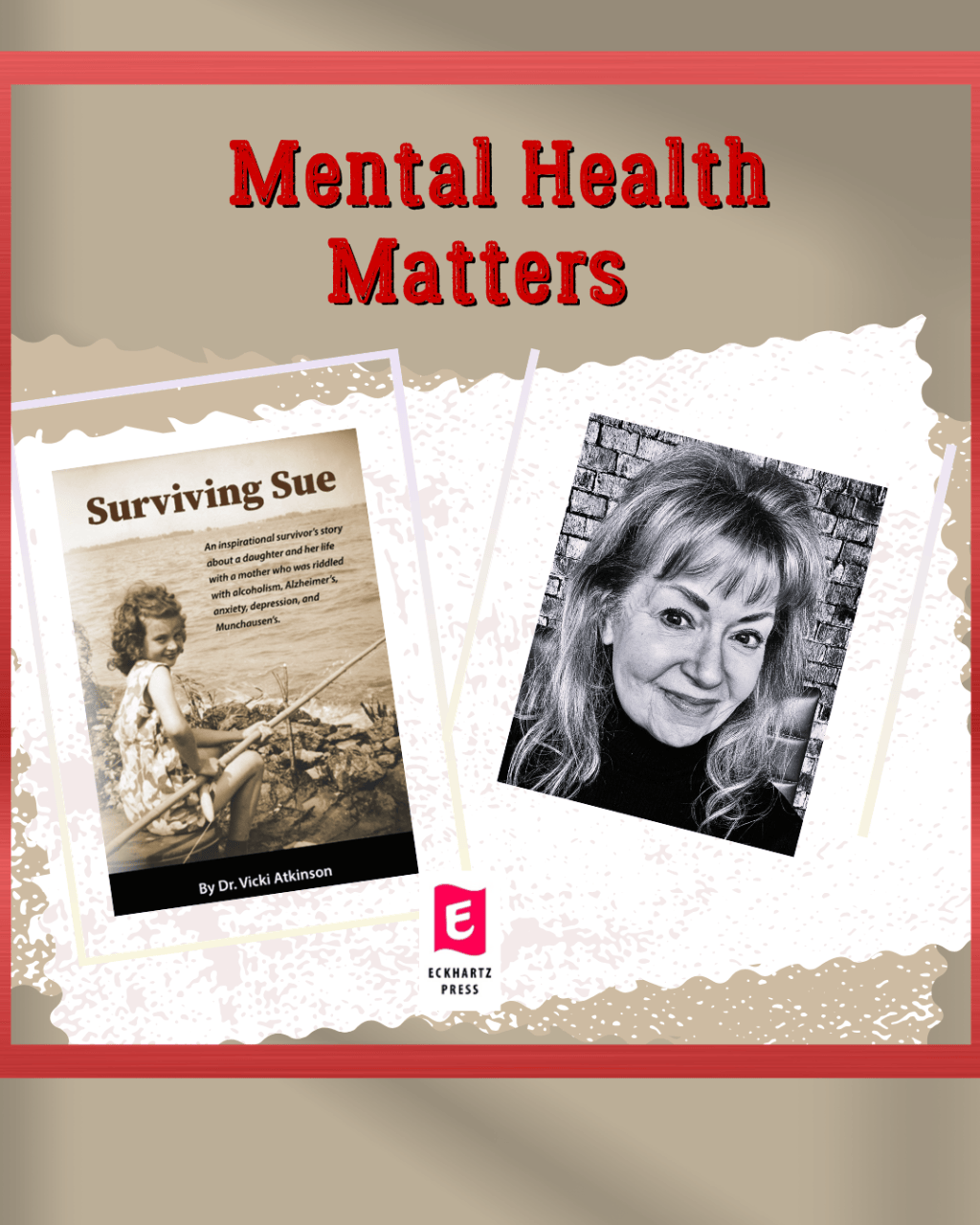
Mental Health Matters: Understanding Sue

When readers of Surviving Sue ask about my capacity for forgiveness, I think of it as a mix of task completion and desperation. Eager to better understand the effervescent blend of madness and love that bubbled within my mom, I traced pain points across her lifespan as I sought resolution, if not peace.

The term “intersectionality” is often used to describe individuals with multiple diagnoses or identities. People like Sue who struggled on several fronts:

Mental health is influenced by a wide range of factors, including our genetics, our early experiences, our relationships, and the social and economic conditions we live in. Intersectionality helps us understand how the social and structural side of that picture works.

When someone belongs to a group that faces discrimination, marginalization, or inequality, this places real pressure on their mental health. Research consistently shows that experiences of racism, homophobia, ableism, poverty, and other forms of social exclusion are linked to poorer mental health outcomes.

But when someone holds multiple marginalized identities at once, the pressures do not simply stack. They can compound in ways that create distinct challenges. Intersectionality gives us the language to name that, and the framework to respond to it.

Intersectionality and Mental Health – Mental Health Matters

Sue’s childhood was rife with abuse and poverty, and she suffered from depression and anxiety and later in life, addiction, Alzheimer’s and Munchhausen’s (now FDIA), too. When she was at her most troubled, Sue suffered under compounding pressure. For those around her, it was hard to know which hardship was driving the dysfunction.

October 10 was World Mental Health Day and in the United States, the month of October is National Depression and Mental Health Screening Month. I wonder if services and intervention had been available to Sue, if her life could’ve been different. Better. Or if my life–or my sister Lisa’s–could’ve been better, too. Less fraught with fear conjured by Sue’s instability.

What I know for sure?

Revisiting the softer, more functional side of Sue–especially her advocacy heart for disabled persons–was a starting point in my own healing journey. I shared the post which follows in October 2023, not long after Surviving Sue debuted, hoping to shine a light on the complexities of mental illness. Three years later? I think the message is still worthy as an example of writing for wellness. My own.


Surviving Sue – Peek Inside: Sue’s Big Heart – October, 2023

Sue was fearless and defiant, pushing for services and equal opportunities long before laws were in place in the U.S. to ensure protection for persons with disabilities.

Sue knew how to build alliances with other families and rose to every challenge as she organized fundraising events and protested, demanding attention and action from elected officials.

It was a different time. A backward time in the early 70’s, long before the ADA (Americans with Disabilities Act) and Sue saw developmentally and physically disabled children becoming cast-offs as families were preyed upon to relinquish guardianship. She and my dad, Sonny, faced similar challenges with my sister Lisa as well-intending doctors and family members discouraged them from committing to lifelong care for a child who might “never be normal”. Lisa’s brain damage at birth resulted in motor issues, cognitive dysfunction, and low vision. Time and again, doctors who had little to offer in terms of support or treatment urged an option of greater good; urging institutionalized care for little Lisa.

How did Sue summon the fortitude to stay strong? In part, she pivoted her rage toward civil action and bold advocacy. She found her rallying cry and made a difference in any way she could.

No bus service to take disabled children to school? 

Sue organized parents to become trained and licensed to drive school buses.

Wait! What? No buses?

Sue had a solution for that, too, and found a way to get buses (“big yellows” she said) donated from Superior Coach.

Because of Sue’s unwavering commitment, Lisa thrived, for a time. So did many other children like Lisa. Sue enjoyed the status and significance for herself, but her purpose was clear. Lead and pave the way, come hell or high water.

Each time we moved (many times due to my dad’s promotions) Sue tried to regain her activism footing, but it became increasingly difficult as she slipped into mental health and addiction issues. Her once boisterous and infectious behavior became twisted and tyrannical and fewer moms and families were inclined to follow her boisterous, well-intending campaigns. But stalwart Sue powered on, finding alternative paths, throwing herself feverishly into volunteer roles at Lisa’s special needs workshops.

When she lacked the ability to socialize and mobilize, Sue found her groove providing respite care for other young adults with disabilities, like Lisa.

In Surviving Sue I wrote about one sweet soul, Lisa’s friend Michael, who became a surrogate member of our family. No one knew how little time in the world Michael had left, but thanks to Sue, the truth about his tortured life was uncovered, resulting in services and support. Michael lived some of the best years of his life as a member of our wacky tribe.

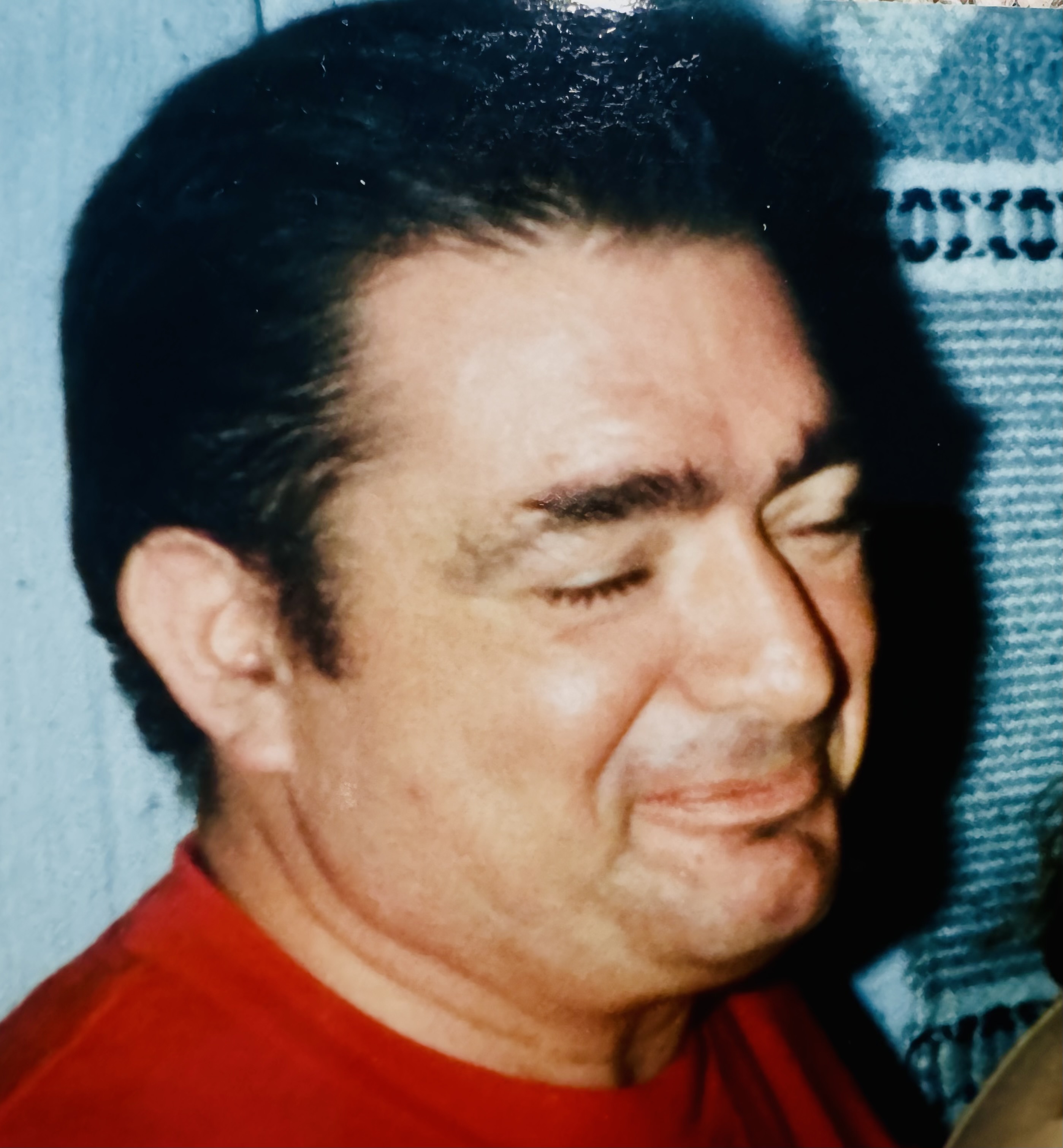
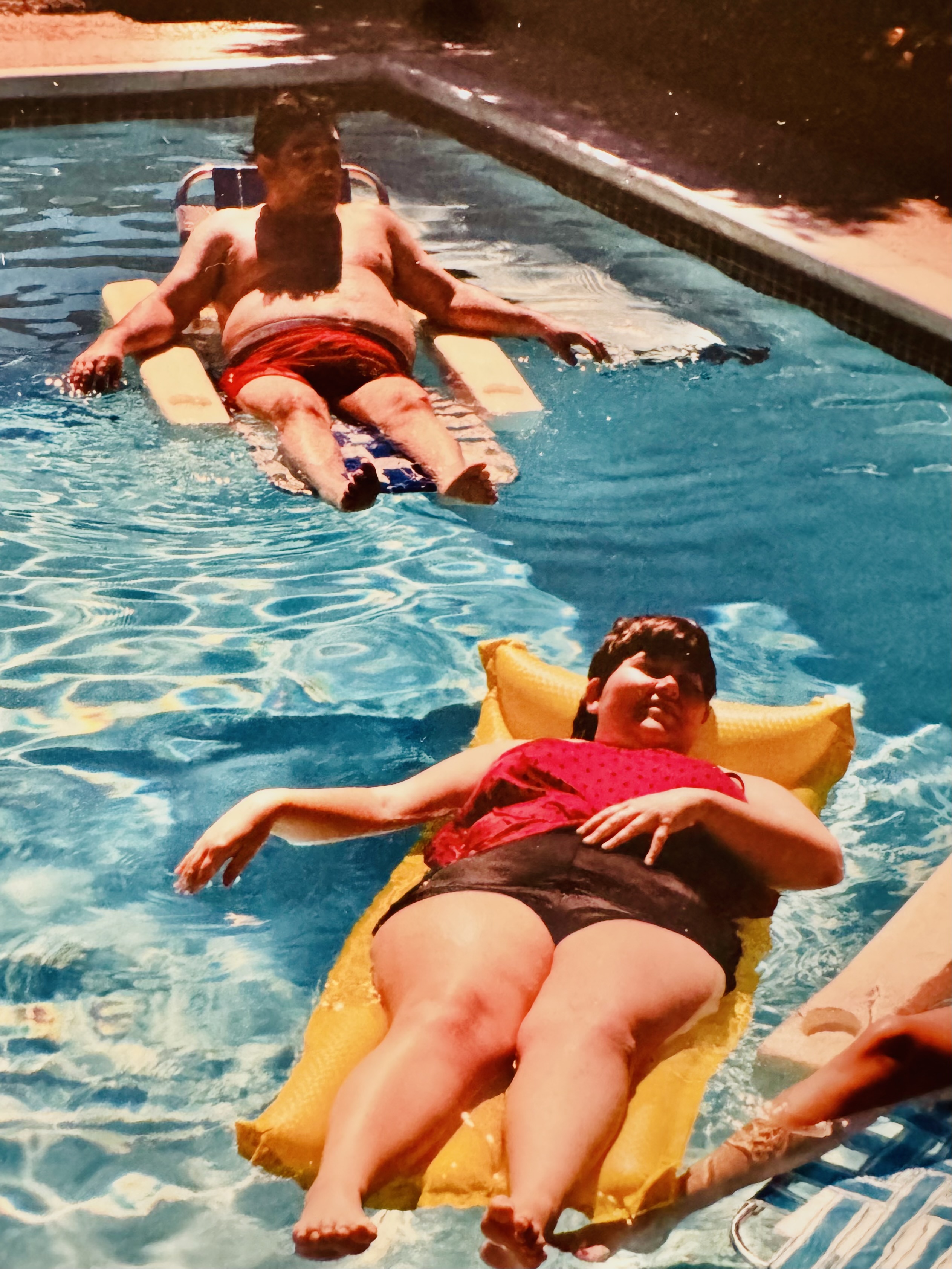
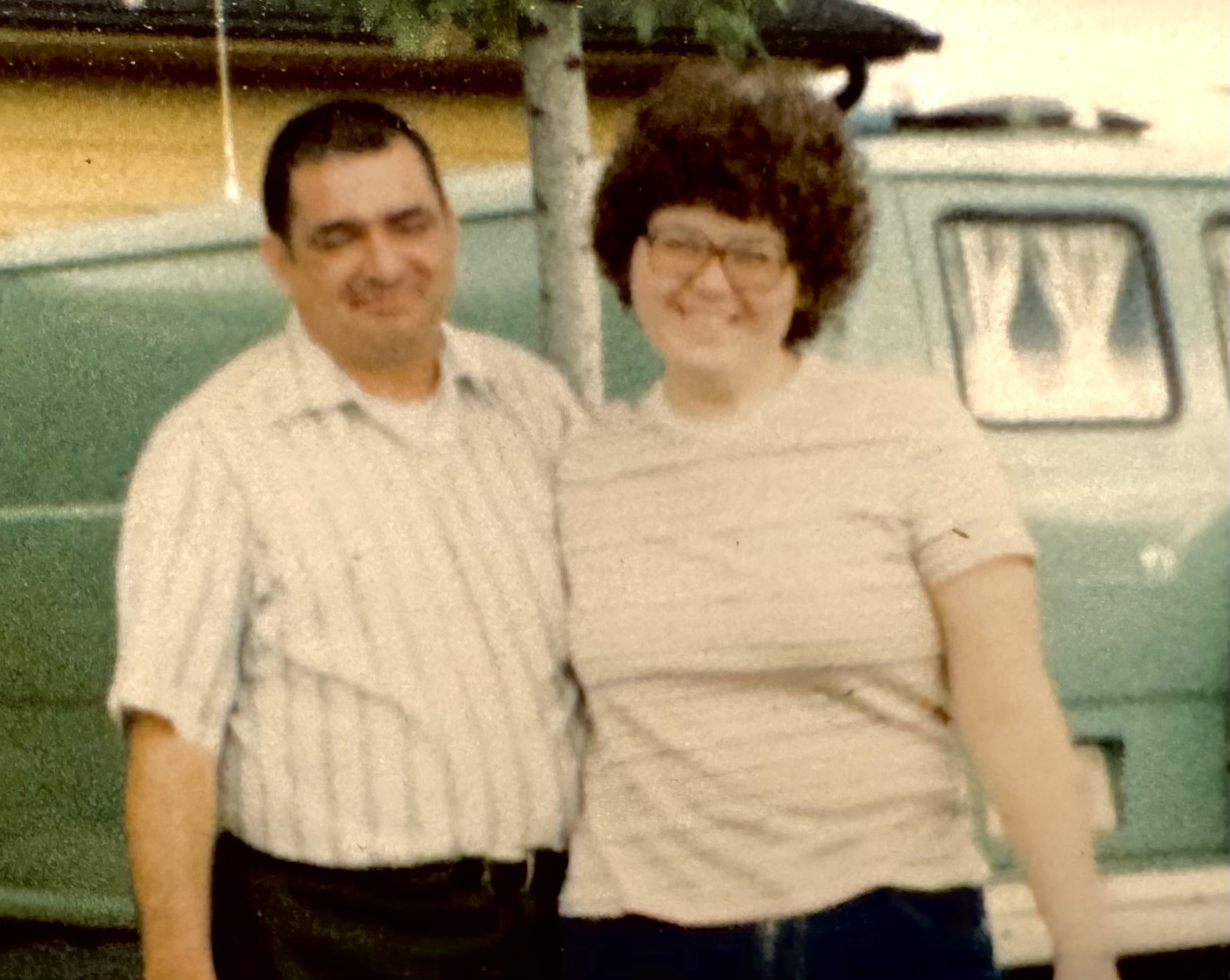
Here are a few photos of Michael and Lisa during this time. Birthdays? Vacations? Holidays? Michael was a welcome addition to our family:

An excerpt about Michael, from Surviving Sue, p.84:

Michael’s story was a tale of horrifying pain and isolation but when he met Lisa, Sue, and Sonny, he found a makeshift family – a first for sweet Michael. Sue and Sonny’s hearts ached as they learned about Michael’s life. Mine, too. Let me share. It’s shocking and painful, still, but it’s also a part of Sue’s story related to her capacity for empathy and her heart for advocacy – especially for the intellectually disabled.

Michael was born brain damaged in 1951 and suffered in ways similar to Lisa. Michael was premature – born at six months, deprived of oxygen upon arrival and he suffered from gestational neglect because of his mother’s alcoholism. He was cognitively limited but mobile and he worked at an “outside job” in addition to attending the workshop, just like Lisa. Michael was functional enough to live on his own in a subsidized apartment in an emerging community-based living option, supported by social workers and staff to manage daily living. Michael was charming and matter-of-fact about his life. His version of his story was a simple declarative statement and I doubt he knew it leveled listeners when they heard it. He would say, “My mom gave me up because I was broken and not like the others but I’m okay now; when I was little, the testing was painful, but I don’t remember all of it, I just have the scars,” and at that point he’d pull up his shirt to show the labyrinth of scars – like a freeway map – all over his chest and back. It was part of his introduction to new people.  He’d offer a hearty handshake and look new friends in the eye, ask their name and say, “Hi, I’m Michael,” and then get to the matter-of-fact reveal. Afterward, he’d pat the new buddy on the back and say, “Nice to meet you,” and move on. He had speech and hearing challenges and never recognized how loud he was – especially joyful whenever he met a new friend. His high-pitched laugh was a trademark, and it was impossible to be around him and not smile along. I always wondered if he and Lisa connected about their scars. Lisa’s were self-inflicted and Michael’s were a tragedy of another sort – but it was something they had in common. Battle scars.

As we came to know Michael, we learned that his mother did give him up and he became a ward of the State as soon as he was born. Accurate medical records about his life were, at best, pieced together by social workers and advocates. Most were locked down by the State and inaccessible, which concerned the staff because it was unusual, and it hampered their intent to provide the best care possible for Michael. They pursued the release of records for an entire year – for Michael and for another client of the workshop – and Sue picked up little reveals along the way.

Michael’s social workers gave Sue a lot of leeway, in part because they were grateful to have Michael included in our family activities and recognized Sue’s good intentions.

Sue and the social workers learned that Michael had been an illegal human test subject. In the 50’s there was no protection for the disabled, especially if they were children without guardians, and the State illegally and heinously conducted surgical experiments on Michael – and others – because they could – they had no family, no advocates. The scars all over Michael’s abdomen, chest, and back were the result of experimental heart valve, liver, kidney, and lung procedures. He had portions of his lungs removed, had a prototype heart valve swapped out for a functioning one and was repeatedly subjected to exploratory human subject experiments.

Michael passed away just a few years after he met our family and losing him was heartbreaking for all of us, Lisa most of all.

Looking back at Sue’s tortured life, I recognize and admire her advocacy heart. The broken bits within Sue helped her connect with others who shared the heartache of indifference. Sweet souls like Michael.


The topic of mental health matters all year long, of course, just like opportunities for intergenerational healing. Thank you for being here. You matter, too!

Vicki 💝

World Mental Health Day

National Alliance on Mental Illness

MIAW Alliance Toolkit 2026

People with Disabilities | NAMI

Content shared is for informational purposes only and is not a substitute for professional mental health advice, diagnosis, or treatment. Always seek the advice of your physician or other qualified health provider with any questions you may have regarding a medical condition.

Hi – I’m Victoria, Vicki, Dr. Vicki. I hold a doctorate in Adult Education and I’m a Licensed Professional Counselor (LPC), and author of Surviving Sue and Slivers.

Check out this link to learn more about my book Surviving Sue – all about resilience and love. Check out this link to order Slivers…a ghost story with surprising twists. Click here for the interview with my publisher, Rick Kaempfer from Eckhartz Press.

P.S. Are you on Substack? If so, I’d love to connect with you there: Vicki Atkinson, Ed.D | Substack

Copyright ©2026 victoriaponders.wordpress.com – All rights reserved


64 responses to “Mental Health Matters: Understanding Sue”

  1. How wonderful to bring out the positive side to your mom’s story. Bless her. ❤️❤️

    Liked by 2 people

    1. You are such a love, Darlene. Thank you very much. Yes…Sue had many facets, for sure. ❤️❤️❤️

      Liked by 1 person

  2. maximum2d4b221224 Avatar
    maximum2d4b221224

    I am both outraged and sad for poor Michael being the victim of inhumane human test “subjects.”

    I haven’t read your book about your mom yet, but hearing how she advocated for kids with disabilities with the bus transportation and including Michael into your family makes me think she had a good heart.

    Liked by 3 people

    1. Thank you, Max. Sue was a complex human, for sure. Appreciate your comment. 😉

      Like

  3. A post that’s both moving and infuriating, Vicki. The good or the evil humans can do is sobering, as is the complexity of people and the capacity for forgiveness.

    Liked by 2 people

    1. You said that so well, Dave—and I’m not surprised! You have a gift for synthesizing and your comment feels spot on. Yes! Sobering….complex. Life with Sue, for sure. Thank you, my friend! ❤️

      Liked by 1 person

      1. You’re very welcome, Vicki, and thank you!

        Liked by 1 person

  4. Complicated and tragic lives. What I found, for myself and my patients, was that working through the painful experience at the hands of deceased parents is sometimes easier because we have perspective, and because their death means the parent is no longer actively inflicting pain on the client. Thanks for this essay on your mom and Michael, and the intersectionality of lives, symptoms, diseases, and people, Vicki.

    Liked by 1 person

    1. I’m ever grateful for your insightful thoughts, dear Dr. Stein. Thank you so much. I know for sure I needed the perspective and distance you highlighted in order to process and understand Sue. Very true. Appreciate you! 💝

      Liked by 1 person

  5. this is so important and reminds us that everyone has a story, a mix of good and bad experiences, and they shape us. for some, there has been too much bad, and it carries through in their live moving ahead. how lucky you were to have learned to make sense of and understand who and way sue was who she was. intersectionality is a new word to me, and it makes perfect sense.

    Liked by 1 person

    1. Beth….love you! I DO feel lucky. Especially when I consider the opportunities I’ve had to think about and consider Sue’s life by stepping back, educating myself. Opportunities Lisa will never have, given her intellectual disabilities. In some ways I think I did the work for both of us. I know you understand. 💝💝💝

      Liked by 1 person

      1. i’m sure you did and i do –

        Liked by 1 person

  6. Thank you for this beautiful post. You reminded me of why I liked “Surviving Sue” so much. I cannot stand the abuse Michael suffered at the hands of the state. It’s so heart wrenching, yet he stayed so positive.

    Like

    1. Thanks so much, Elizabeth. I remember how touched you were by his story. Have I told you lately how grateful I am for your friendship? Thanks so much. I’m leaning into a bit more of the mental health focus in my next project, so I’m glad to hear you don’t mind the revisiting of some of these weightier topics. Much love to you! 💝😊💝

      Liked by 1 person

      1. Thank you so much for the kind comment and our friendship. I also like Dr. Gerald Stein’s comment about gaining perspective after a parent dies and that they are no longer inflicting pain. I wrote a draft years ago that I decided to hold until my parents are not here. It would be hurtful for them. But I needed to write it and it did help me. My dad is 94 and doesn’t seem to be going anywhere!

        Liked by 1 person

        1. I appreciate you so…thank you for highlighting Dr. Stein’s wisdom. Such a good reminder about perspective and timing and your example is perfect. Sending much love! ❤️❤️❤️

          Liked by 1 person

          1. Thanks! He has so much wisdom. 💕

            Liked by 1 person

            1. Indeed!!!! ❤️😘❤️

              Liked by 1 person

  7. Vicki, your writing and healing journey is a testimonial to your resilience. I admire your ability to look deeper into Sue’s behaviour and your desire to understand what was driving the disfunctional behaviour and to see the good. You do have to wonder how Sue’s life would have been different if she had access to help. 🤗💖

    Liked by 1 person

    1. Thanks for all of that, dear Michelle. I think it’s the biggest, nagging take-away for me these days as I worry about services and support for persons with disabilities, like Lisa, and others who are already at risk for all sorts of reasons. Mental health services shouldn’t be a luxury for a lucky few. Love you much, my friend! 💝

      Liked by 1 person

      1. I agree 100% my friend. Hugs to you and your sweet sister. 🤗

        Liked by 1 person

  8. Oh Vicki, this was so heavy but also lovely in a bittersweet day. It continues to astound me how you can honour Sue with kindness and grace while also not letting her off for the challenges you and Lisa endured. She was a nuanced individual who also did so much good. And Michael sounded like such a wonderful person. I’m so sorry that he was gone far too soon. A lovely reminder for us all on the importance of advocating and showing up for mental health issues.

    Liked by 1 person

    1. Thank you, Ab…you are so right on in your assessment. Sue was so very nuanced…spectacularly good and kind at times and horrific in other aspects. I think learning about her self-loathing and regret gave me clarity. And certainly she was at her best looking out for Michael. Grateful for your big heart for others! ❤️❤️❤️

      Liked by 1 person

  9. Dear Vicki, thank you so much for sharing this post.Mental health is so important and I think a lot of people are “under the radar” and not getting the help they need 😪.As you might recall my own mother was schizophrenic.Her care and medication needs often seemed trial and error based, until I became her full time carer (which was no mean feat either).And you might have heard about the young here who was mauled to death after entering a tiger enclosure.Where were his carers? The system is stretched as we know.
    You do such a fantastic job of highlighting these important issues , and being a survivor brave enough to tell your story, you give hope too.
    Bless you my warrior sister ❤️🙏❤️

    Liked by 1 person

    1. I do remember, dear Maggie, about your mom. One of those ties that bind us. We understand the pain points, firsthand. And your point about the mauling…absolutely awful. The reporting about it from our asinine President has been appalling.
      Thank you for being you and offering encouragement to me. It means the world. You know the topic of mental health is deeply, deeply personal…
      Love you! ❤️❤️❤️

      Liked by 1 person

      1. LOVE YOU TIMES A TRILLION TOTS XOX

        Liked by 1 person

        1. Awww! And I need to add — Lisa loves you back! ❤️😉❤️

          Liked by 1 person

          1. Awww Lisa ❤️🥰❤️ THANK YOU !!!!!

            Liked by 1 person

  10. Deeply, deeply personal dear Vicki ❤️❤️❤️ yet connecting and sewing threads of mutual understanding and love through sharing 🙏😘🙏

    Liked by 1 person

    1. Wow!!!! Your comment reads like poetry, my Maggie sister. Almost like a poetic mission statement, describing the power of writing. From the depths…
      So good! ❤️❤️❤️

      Liked by 1 person

  11. Awww Vicki 🥰❤️🥰 what a lovely thing to say xo
    Perhaps I was Rabbie Burns in a previous life 😁
    Honestly, sometimes I struggle to ut a line together 😏

    Like

  12. Mental health is so important and so misunderstood. Thank you for sharing these stories and your own healing journey with your mom.

    Liked by 1 person

    1. Oh…thank you for that, Deborah. ❤️
      And…happy birthday, my friend! 😘

      Like

  13. This is an excellent post on mental health, Victoria, with a wonderful story about Sue and you.

    Liked by 1 person

    1. Your kind words and praise are so lovely, Tim. Thank you very much! ❤️😉❤️

      Liked by 1 person

  14. My pleasure, Victoria! 😍

    Liked by 1 person

    1. !!!❤️😉❤️!!!

      Liked by 1 person

  15. Your description of Michael’s life breaks my heart; that he was used as a human test subject for all the things you describe is both horrendous and criminal. And Michael knew enough to share his scars – what the “professionals” did to him. Thank God, your family found him and provided love and nurturing. And there was a thought in there about Sue and her advocacy and your frequent moving that jumped out at me. She had found success early on, and with each move, she would try again, but I can totally understand how difficult it would be to gain her footing in a new place; again and again. As this “superpower” advocacy slipped away (and not by her doing), did that element play a role in her decline? Losing confidence and a skill that had grounded her? Would life had been any different if you never moved? Probably not; I’m just thinking here. Thanks Vicki for such a poignant post. 💝💝

    Liked by 1 person

    1. Ahhhh! I think your observation is right on about Sue losing ground, losing a meaningful and much-needed sense of “self” with every move. Love your insight, dear Melanie! And yes…being able to step in and help Michael surely helped Sue…knowing she could make a tangible difference in the present…understanding no one could erase the harm done in the past to him. Thank you SO much for all of your thoughtfulness! Xo! ❤️😉❤️ Love you!

      Liked by 1 person

      1. Yes, something higher brought them together, to help one another. That’s such a positive force – wonderful! And the other just hit me as I read it today. Love your caring so much about all the people out there who struggle with mental health. Love you back! ☺️❤️☺️

        Liked by 1 person

        1. Oh…you are the best! Thank you for the extra comment and calling out the mental health advocacy and awareness. It means a lot! Xo! ❤️❤️❤️

          Liked by 1 person

  16. Michael’s story broke my heart when I read it. The things that some institutions did to marginalized people were horrifying.
    The world needs more advocates like Sue. Despite all her problems, she made a huge difference.
    Thank you for sharing, Dr. Vicki

    Liked by 2 people

    1. Thank you, Nigel, for seeing and understanding the nuances of Sue. I still cannot read that section of the book without tears…remembering Michael’s tremendous spirit despite all that he endured. Xo to you, my friend! ❤️❤️❤️

      Liked by 1 person

      1. It is so heartbreaking. Just reading this post brought back the feelings I had while going through your book.

        Liked by 1 person

        1. I appreciate you…it is painful and powerful. So many stories like Michael’s remain untold. Sending hugs your way.
          ❤️❤️❤️

          Liked by 1 person

          1. Thank you and same to you.
            Have a restful night, Dr. Vicki.

            Liked by 1 person

            1. You, too! You, too! ❤️

              Liked by 1 person

  17. I’ve fallen behind in commenting on other posts, but I wanted to jump on here. Your ability to see all different sides and forgive is pretty amazing Vicki. It’s one thing to go through what you experienced, but then to turn around be sensitive to the abuse and poverty that she went through is a credit to you. Most people would have tunnel vision on their feelings/emotions/etc. It says a lot about you! To quote your own post: “Thank you for being here. You matter, too!”

    Liked by 2 people

    1. Brian…thanks for ALL of that! I’m hoping I’ve got the gas in the tank to share more about how I found ways to do the work. I had excellent resources and support…so grateful I found closure for myself where Sue is concerned. We’ll see how this next project takes shape to tell the “how” about literally surviving Sue. 😉😉😉

      Liked by 1 person

  18. This is such an impactful post on so many levels. Your forgiveness, the complexity of history and issues, and dear Michael’s story. This is so telling, “When she was at her most troubled, Sue suffered under compounding pressure.”

    Your ability to break it down and hold empathy for Sue is so instructive as well. Incredible, my dear friend! ❤

    Liked by 2 people

    1. Oh, Wynne. Your comments always highlight the biggest a-ha moments…you’re so good at identifying the pockets of clarity in things I write, amplifying back to me. Thank you, dear one! Xo! ❤️😉❤️

      Like

  19. Wow, your take on forgiveness as a mix of task completion and desperation is brilliant and quite relatable.

    And I just love everything about this post–how Sue was a broken person, yet still did the best she could for the people she loved and cared about along with those like Michael who didn’t have a voice or safety net. ❤️ This is such a beautiful reminder of how, despite all the suffering in the world, each of us has the capacity to make a difference, even if we have our own demons or struggles. 💝

    Liked by 1 person

    1. “Each of us has the capacity to make a difference”…so well put, Erin! Thank you for your kind words and endless support. Xo! ❤️

      Like

  20. I remember Michael’s story from the book, and it’s an extremely painful one. It broke my heart the first time I read it, and it still troubles me when I think about it. That’s why I said books like yours are extremely important and should be read by everyone. We need to learn how to recognize these situations, and in some cases, family members need to get involved for a child’s well-being. Thank you for bringing awareness to this issue, Vicki.

    Liked by 1 person

    1. So grateful to you, Edward, for your close read and unwavering support. I agree—Michael’s story is heartbreaking while also being a reminder to be vigilant about protecting the most vulnerable ones in our world. Appreciate you! ❤️

      Liked by 1 person

      1. You’re very welcome, my friend. 🫶🏼

        Liked by 1 person

Leave a Reply